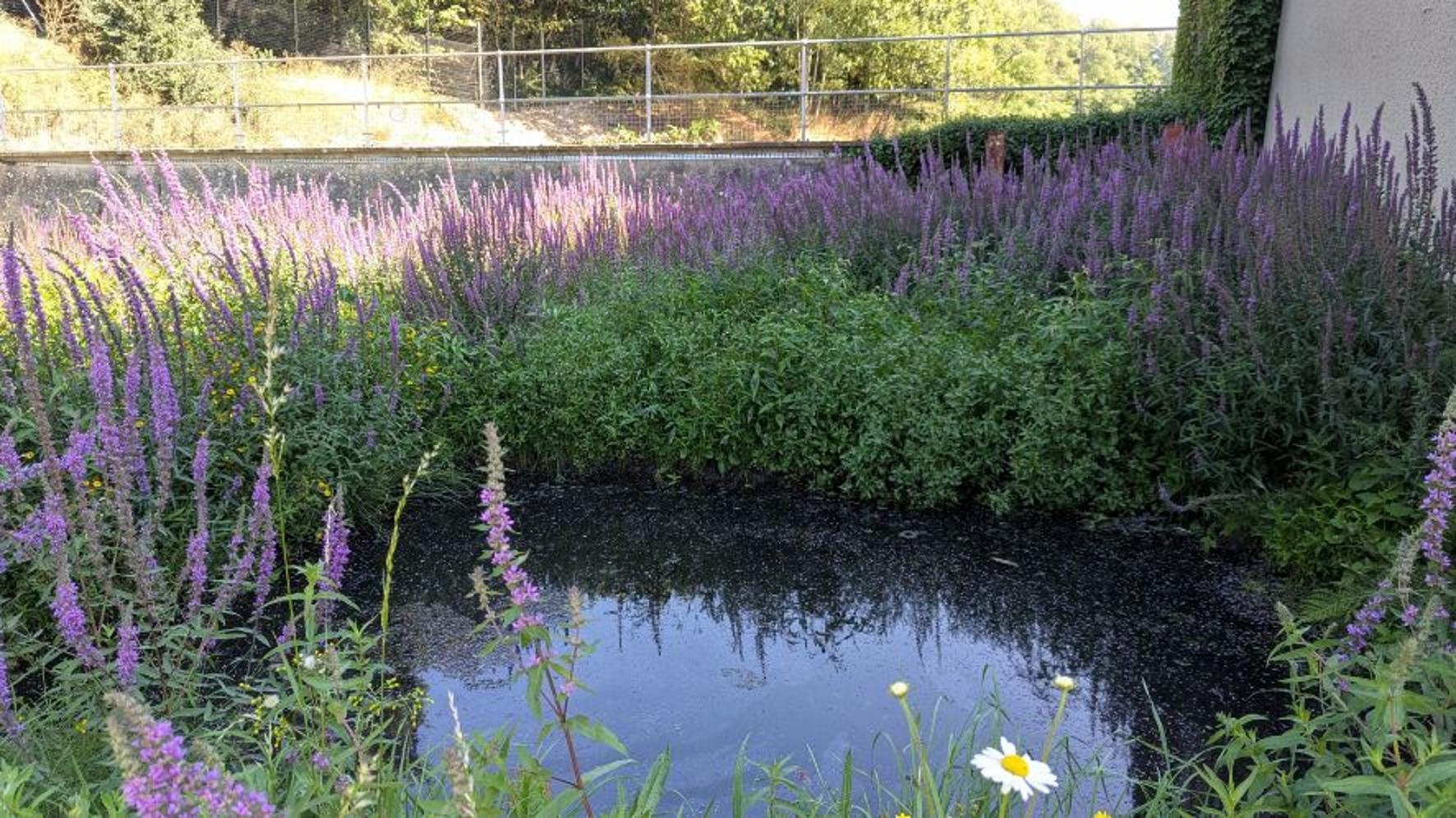
In a time of drought, a pond can provide an oasis of green when surrounding grass turns brown and brittle.
We're keen to support biodiversity at our sites and we have a campaign, NatureSafe, that looks at ways to make them more nature friendly. As part of this campaign, we created a pond in a disused area of one of our water treatment works.
Making room for native species
The site manager and staff worked closely with our Natural Resources team to produce a plan for managing and enhancing biodiversity across the whole treatment works site.
One of the first steps was removing a patch of cherry laurel growing at the site. This is an invasive species that is not native to the UK and can outcompete other native plants, reducing biodiversity. We cleared the cherry laurel to allow a wider range of native plants and wildlife to thrive.
Building a pond
Another area of the site had very low biodiversity, with largely bare patches of ground and only a few weed species growing. This made it an ideal spot to create a pond.
Teams working at the site volunteered their free time to help build the pond, becoming absorbed and passionate in the new habitat they were creating.
Creating a nature haven on disused land
Today, the area around the pond is filled with the purple loosestrife, a striking wildflower that attracts a wide variety of pollinating insects. Throughout the summer, the pond has been buzzing with life as insects visit the flowers for pollen and nectar.
In time, this kind of habitat can provide a home for all sorts of wildlife. The peaceful site provides perfect conditions for species to live undisturbed, in a previously barren corner. In a time of drought, these small ponds play a really important role in supporting nature.
How you can support wildlife
The repeated heatwaves we've seen this summer have been hard on wildlife. Just like humans, animals struggle to regulate their body temperature in hot weather and they can become dehydrated.
Heat and drought also impact delicate food chains, as wilting plants provide less food for insects, and therefore less food for the birds and other animals that rely on insects for food.
Here are some ways you can help support wildlife in a drought:
- Provide water – a birdbath or shallow bowl of water can help thirsty birds, insects and animals. Replace the water daily to reduce bacterial growth (leftover drinking water is good for this).
- Make a pond – this supports wildlife and can be topped up from your water butt; tap water contains traces of chlorine that can harm wildlife.
- Create shade in your garden – shady spaces allow wildlife to cool off and hide from the heat of the sun.
- Use water wisely at home – saving water helps to keep more in rivers and reservoirs, supporting natural habitats.
See our environment projects webpage for more information about how we support natural habitats.