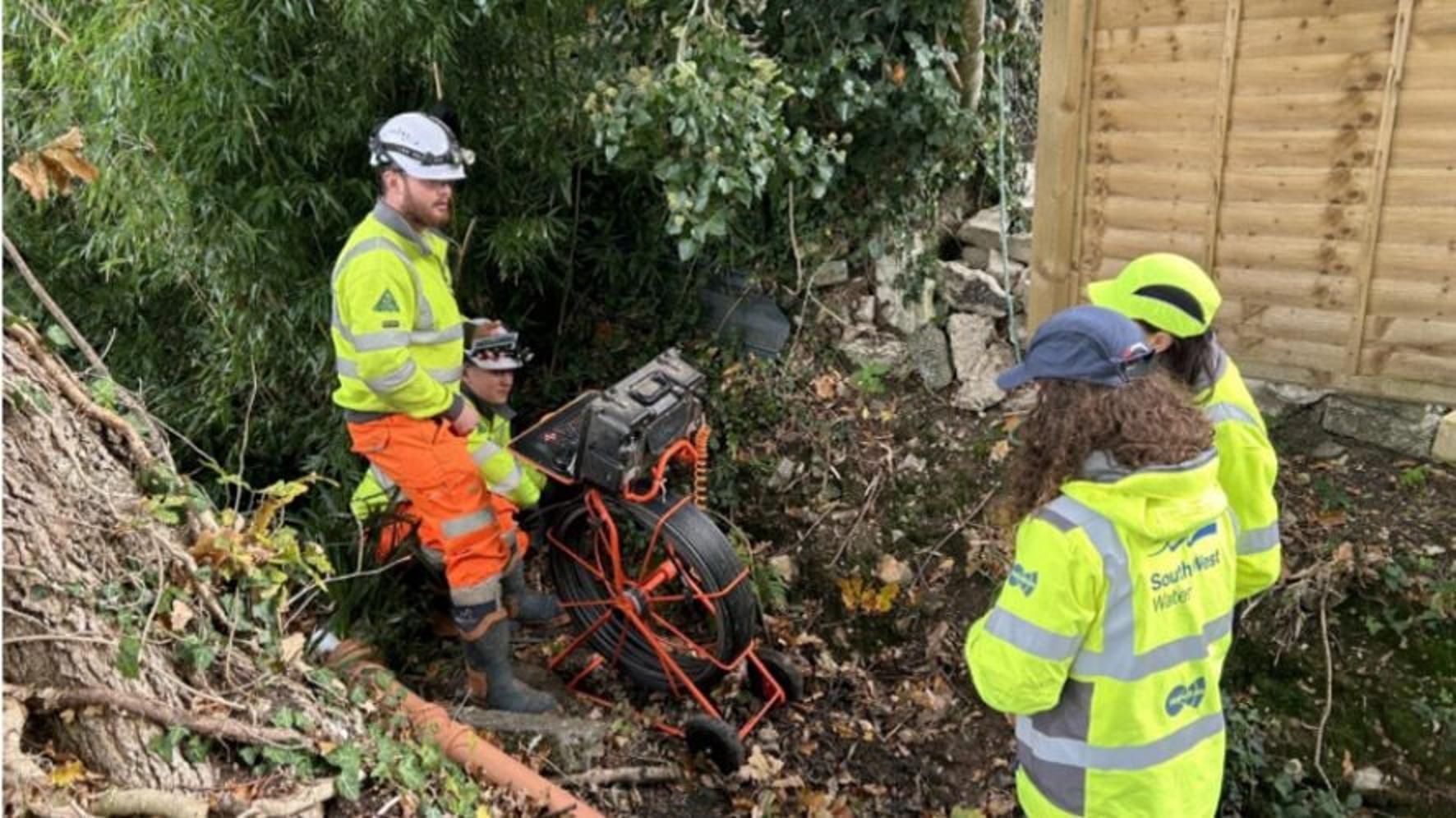
South West Water is tackling drainage misconnections across the region as part of wider efforts to reduce pollution in local rivers and streams.
Estimates suggest there are around 16,000 misconnected properties across the South West, which can result in untreated wastewater entering local rivers and streams.
In 2025, South West Water teams identified and worked to resolve 539 properties with misconnections, at a cost of over £200,000.
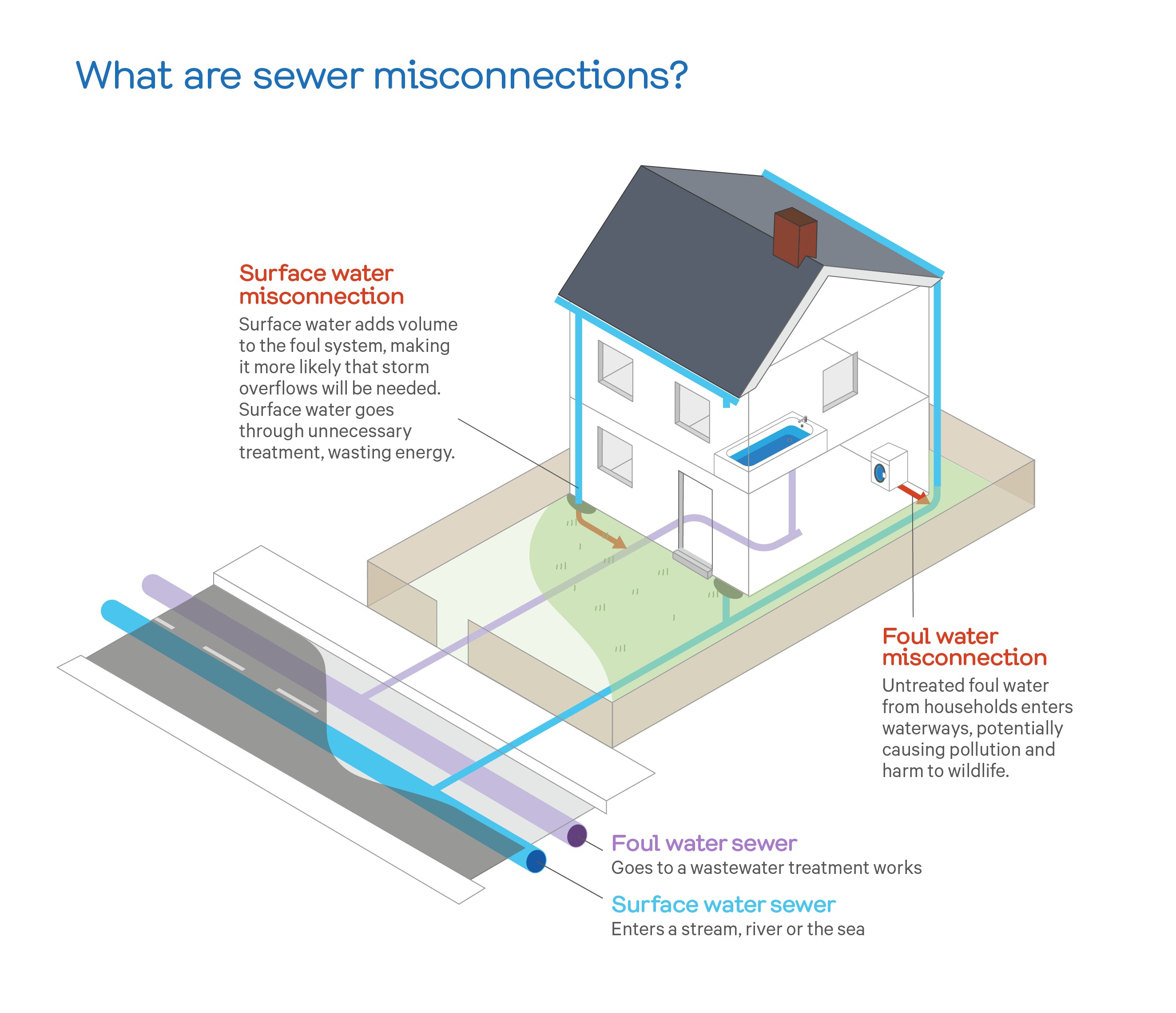
Most properties are connected to two separate drainage systems:
- The foul sewer which carries wastewater from homes to treatment works
- The surface water drain which carries rainwater from guttering on roofs, driveways and roads to nearby rivers or streams.
A misconnection refers to situations where these systems have been incorrectly connected into each other. A foul sewer connection into a surface water drain results in untreated sewage being discharged directly into local watercourses.
Surface water drains being connected into the foul sewer can lead to the sewer network becoming overwhelmed and causing storm overflows to activate.
Meet the team tackling misconnections across the region
Cat Chappell, South West Water’s Pollution Technician, is part of the team working to resolve misconnections.
Speaking about the process, Cat explained: “To tackle these hidden plumbing issues we start by carrying out careful investigations in areas we’ve received reports of a pollution to check for debris, odours and dicolouration in the water.
“Once the team has identified there has been a pollution, we report it to the Environment Agency and take water samples for testing to identify the severity of the pollution and why it has occurred.
“Our engineers will then use specialist cameras to trace contamination through the network of pipes, helping to pinpoint any properties with potential misconnections.
“They then contact those property owners to request access to do a dye test and further investigations to confirm whether they have a misconnection.
“Once a misconnection is identified, we contact the customer to inform them of the issue and encourage them to rectify it through a reputable plumber. Misconnections are private issues and the responsibility of the property owner to rectify it.”
There’s good news though and Cat explains that these hidden plumbing issues can be prevented and customers can help by taking a few simple steps at home.
“Identifying misconnections can be challenging as they are often hidden. That’s why working alongside our customers and the communities to do this important work is crucial,” Cat said.
“Misconnections can happen when a property is first built, during home renovations like adding an extension, or when plumbing is changed and drainage connections are not checked carefully.
“That’s why we’re asking customers to help us prevent these issues from happening by checking their drains before doing any renovations or plumbing work, and using qualified plumbers and builders and to work with us if you’re contacted about a potential misconnection.
“Taking early action helps us to resolve these issues faster and helps us to protect the environment.”
Even small misconnections can have an impact on local waterways affecting plants, wildlife and water quality.
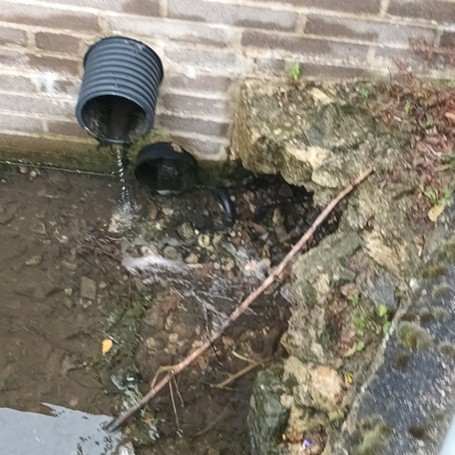
Customers can help by looking out for signs of a pollution in their local area including:
- Fatty substances and sewerage related debris in streams or rivers
- Foam in the water which appears as bright white suds or soap bubbles
- Sewage fungus which appears as grey, feathery growths on riverbeds
- Discoloured water near outfalls or surface water drains
- Fragrant detergent smells like washing powder and laundry detergents.
For more information about misconnections and the work South West Water is doing to tackle them, visit www.southwestwater.co.uk/misconnections