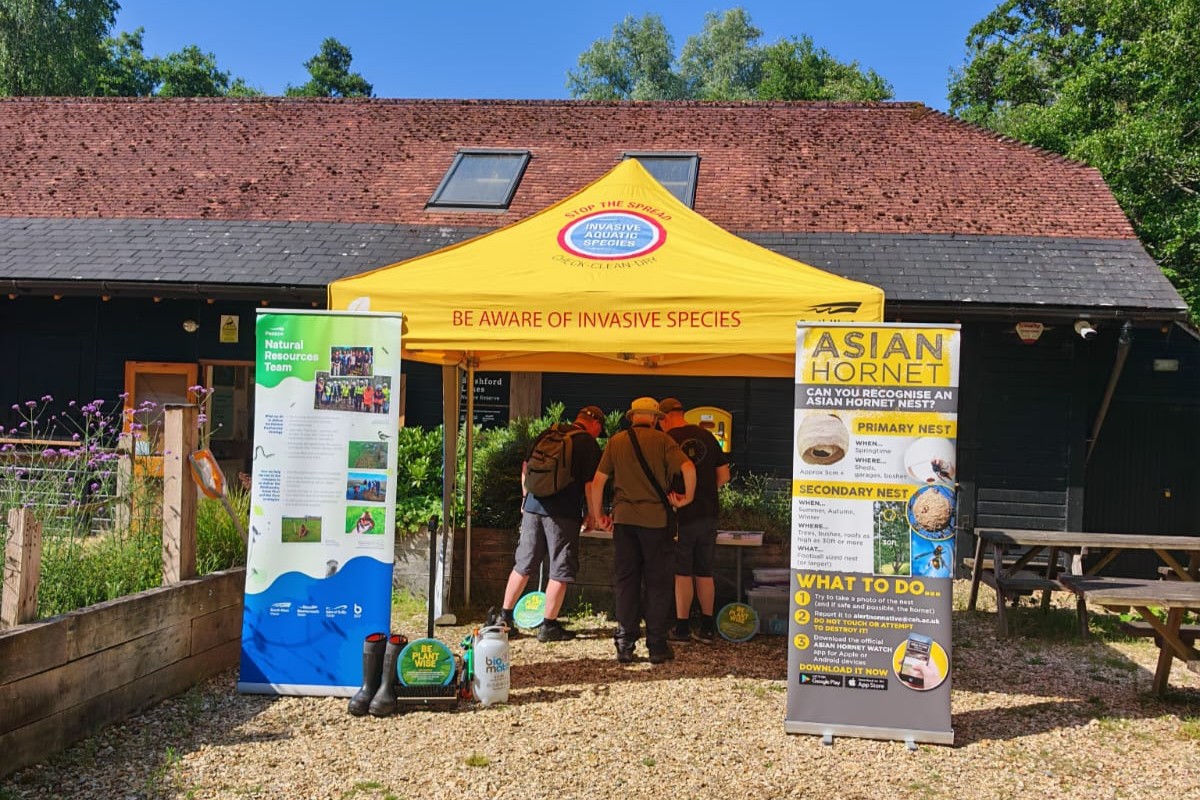
This week, 22 – 28 June, is Invasive Non-Native Species (INNS) Week, an annual event led by the GB Non-Native Species Secretariat to raise awareness about the alien species harming our native wildlife. South West Water held activities throughout the week to mark the occasion, following on from hosting the South West Invasive Species Forum’s (SWISF) 10th birthday celebrations in Bristol.
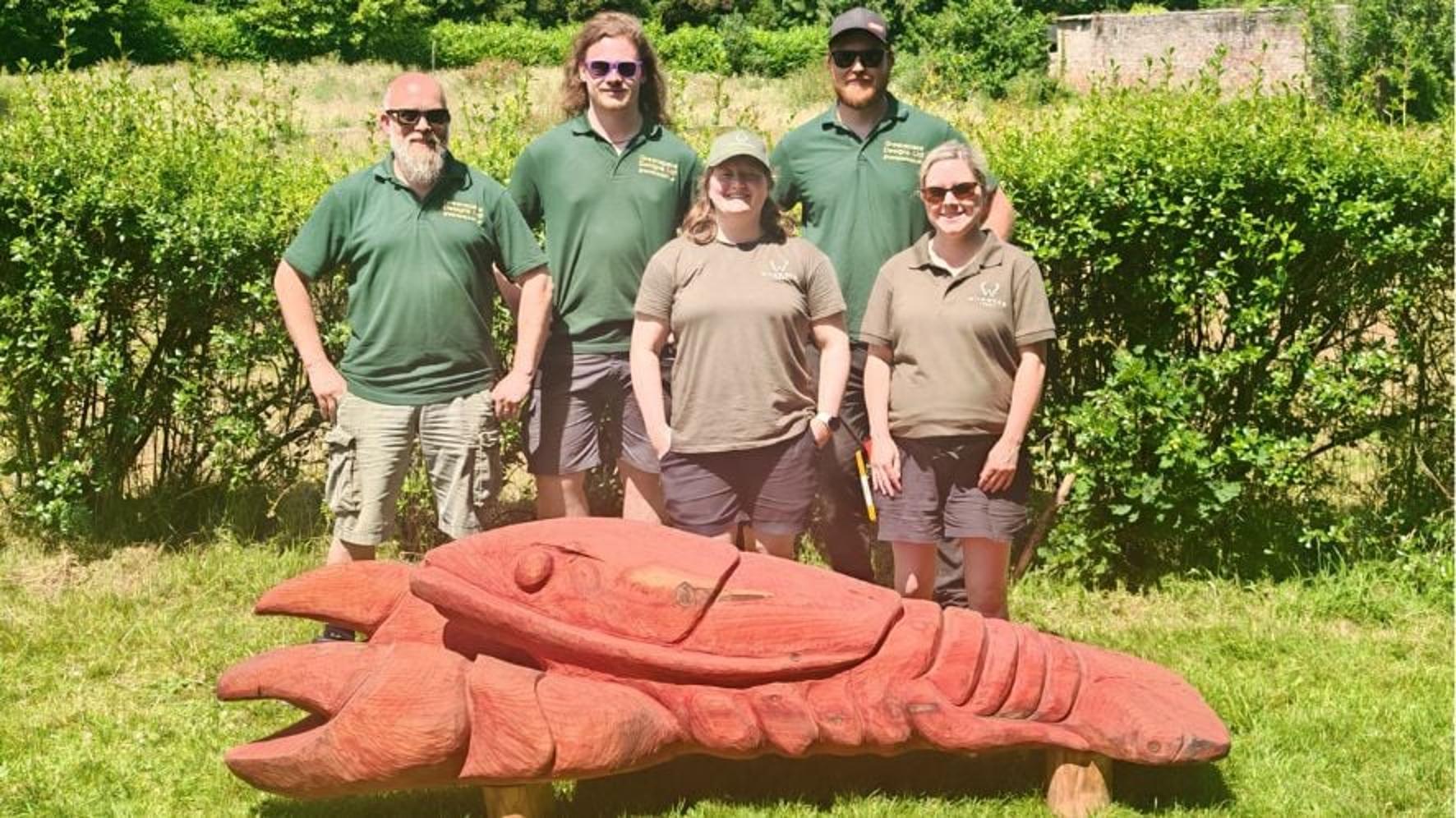
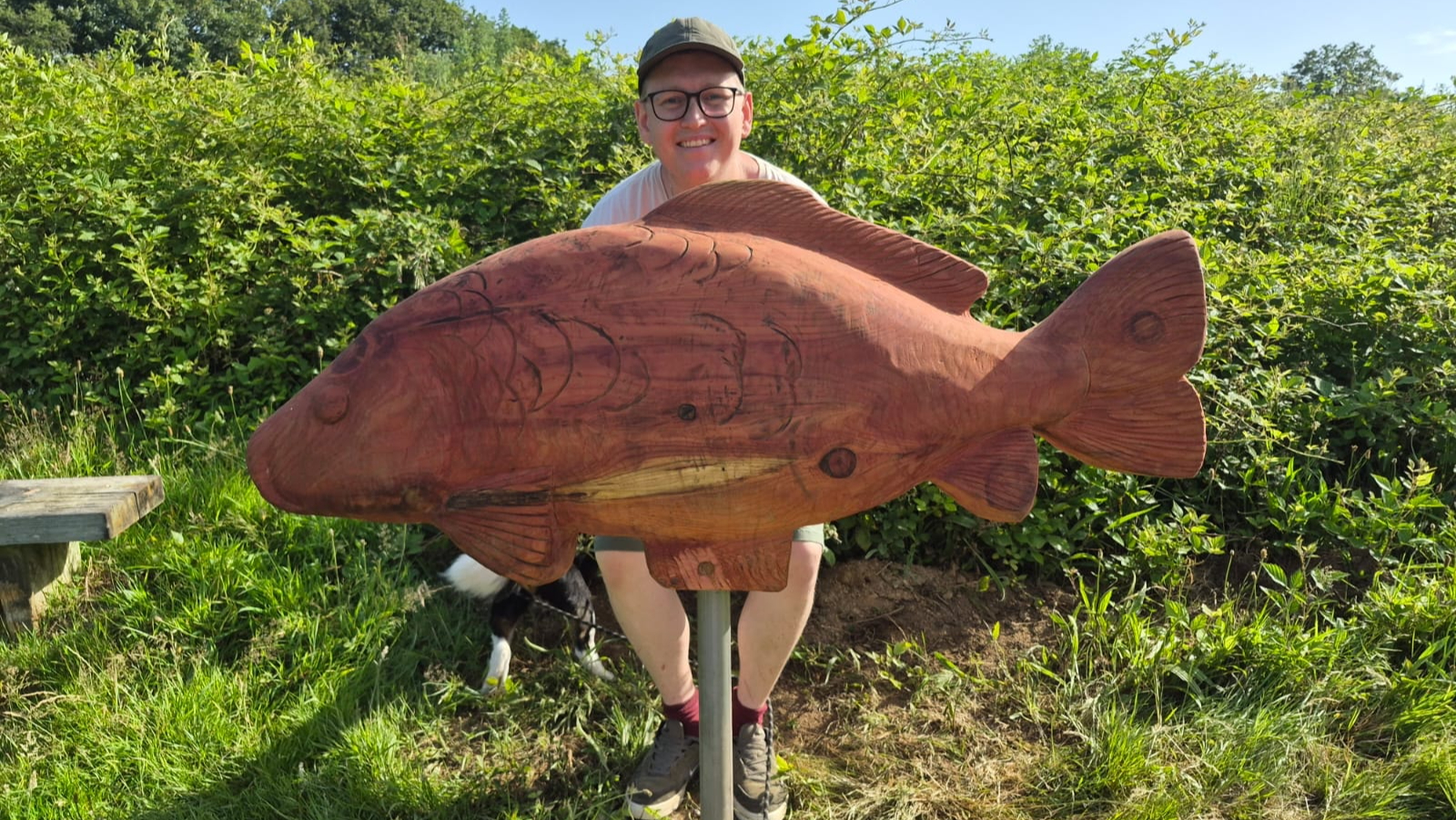
In addition to conducting surveys and collecting data on various marine species present across our assets, celebrations took place both in person and online to raise awareness of INNS week. Highlights include art installations by Greenspace of a 4ft carp at Argal reservoir with South West Lakes Trust, and a 6ft crayfish model which will be making an appearance in Wildwood on Friday 26 June.
Non-native animals or plants transported by humans into Great Britain risk damaging our native wildlife as new predators, competition for food and introducing disease. Once the species becomes harmful, they would be considered a non-native invasive; these alien species are one of the top 5 drivers for global biodiversity loss and have played a part in 60% of plant and animal extinctions.
The work carried out by environmental charities, companies, and individuals across the UK was placed under a spotlight at the SWISF. The Environment Agency, the Waterlife Recovery Trust and Conservation K9 Consultancy, to name a few, presented the work they carry out to identify invasives and then take further action to manage and protect the UK’s natural world.
Freely open to the public, the event took place in Bristol’s Grand Hotel by Sunday and saw guest speaker Dave Slater, Regional Director of Natural England, and many more, reviewing invasive activity over the last 10 years, and looking forward to what the next 10 will bring.
The day’s agenda was packed full of information, data, and project plans, with an overarching feeling of hope and a shared understanding across the speakers that the removal of invasives is an urgent but achievable goal.
Invasives are difficult to manage and cost the economy nearly £2 billion annually due to control costs, reducing agricultural productivity, and damaging public utilities. For example, zebra mussels can clog water pipes and cause operational disruptions. Invasives can also impact our health and can have a significant impact on water companies by disrupting the ecosystem and subsequently reducing water quality.
New non-native species are introduced into the UK every year, most are harmless, but around 10-15% of these go on to become invasive and have negative impacts. Similar to how the removal of a keystone species can cause environmental and ecological chaos, as seen following the infamous removal of elk from Yellowstone National Park, the addition of an external species can also throw the natural order into complete disarray.
Invasives can be brought over via accidental transport when plants or insects become unwelcome hitchhikers on cargo ships or imported materials like timber. Animals can also be imported with the intent of becoming exotic pets, in the past this was commonly for ornamental or hunting purposes, and can then rapidly grow in population if they are released. This led to an influx of American mink and grey squirrels, the former of which became massive threats to water voles, and the latter eradicated red squirrels.
Whether accidental or not, this is a man-made problem and therefore requires man-made solutions. Human intervention causes wonderful species, which are as valuable as any other in their native ecosystem, to become a part of a larger problem when brought into foreign habitats.
Kate Hills, Biosecurity and Invasive Non-Native Species Manager at South West Water, said: “The last ten years of hosting the Invasive Species Forum have been a wonderful whirlwind. We have seen new invasive species arrive in Great Britain, but we have also seen partnerships and new forums work to prevent the spread of INNS and to protect our native species. Substantial efforts have been made to improve new technologies such as biocontrol, the use of detection dogs and eDNA. However, we still need better longer-term funding and a strategic approach to be more effective.
During this ten-year period the yellow-legged Asian Hornet was discovered near Bristol. Although this hornet has proved an aggressive predator of honeybees and other pollinators, its appearance is a testimony to how we hope to react to invasive species going forward by raising public awareness and delivering a clear nation-wide agenda.
I look forward to hosting many more forums and fostering this knowledgeable community we have built to learn how we can best prepare ourselves for future invasions.”
Notes to editors
A video of the Invasive Species Forum featuring an interview with founder, Kate Hills can be seen below. Kate, the first dedicated INNS post within the water industry, started the forum in 2016 to create a community of people fighting for the same mission – to protect our wildlife against damaging invasive species. Kate co-hosts the SWISF with Nicola Morris from South West Lakes Trust.