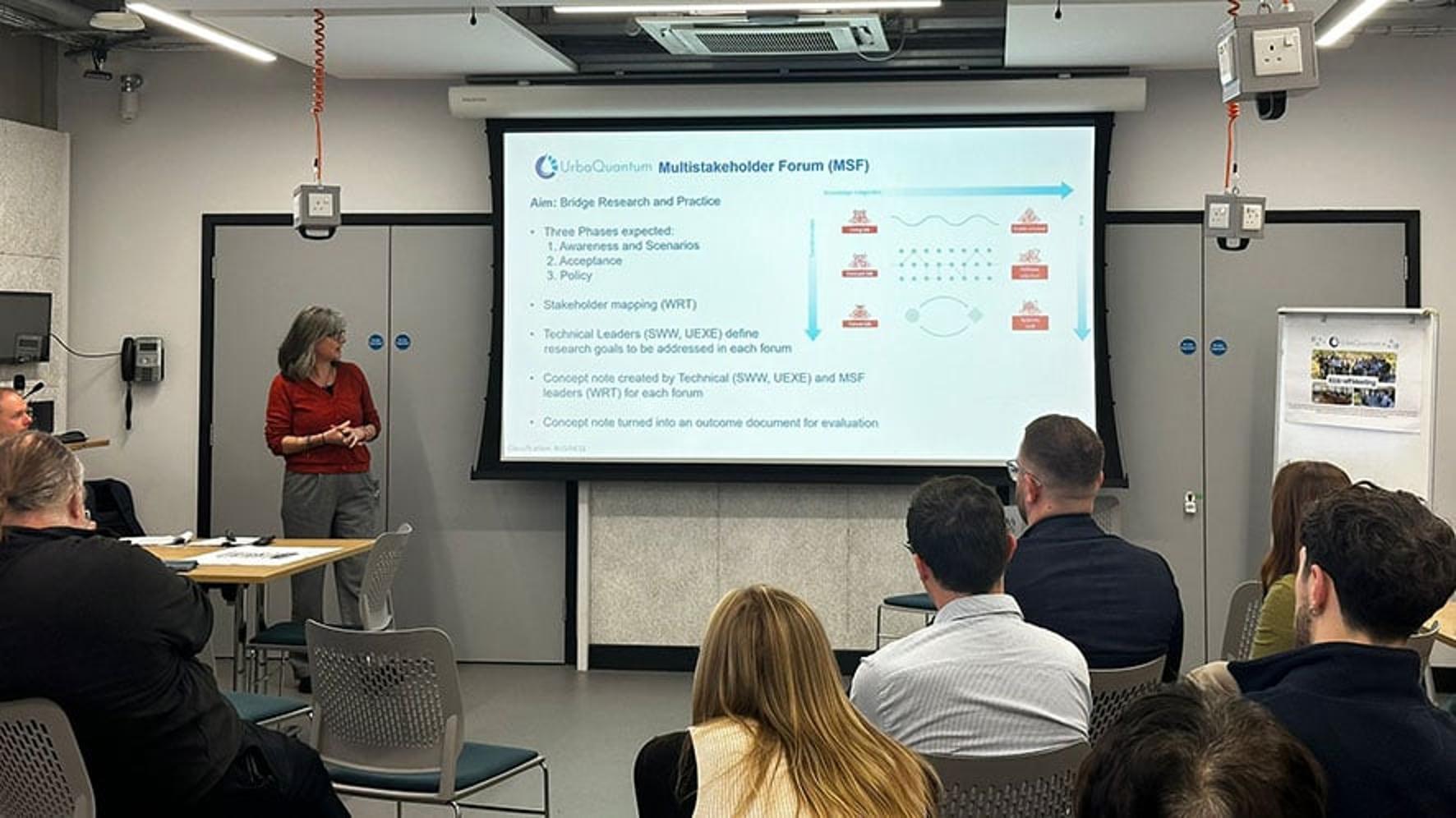
South West Water has launched two new projects to help develop innovative techniques to help improve urban water quality and tackle pollution in waterways.
The EU-funded projects, UrbaQuantum and QLeanUP, will run over four years. They are UK based trial studies being developed by the Westcountry Rivers Trust and the Centre for Water Systems at the University of Exeter.
The projects will help develop new techniques and technologies to monitor the health of waterways and bring together new data sources that will help to plan future investment into the water sector more efficiently.
With the unprecedented impact of climate change affecting the weather and environment, South West Water is working hard to future-proof its services to reduce pollution and protect bathing waters.
These projects will build on the company’s understanding of how pollutants from storm overflows, roads, and agricultural land move through urban water systems, to ensure they can provide adaptable, high-quality services in an ever-changing world.
Two studies will take place for the projects, one on the River Dart and one in Plymouth, and will use real‑time monitoring, advanced sensors and AI‑based tools to detect, monitor and track pollutants to predict how changes to environment or population could impact groundwater, rivers, and urban waters.
New sensors and digital tools will be built to track pollutants including pathogens from industry, agriculture, wildlife and domestic sources, as well as microplastics, as they travel through urban water systems like sewers, stormwater discharges and rivers.
This will be supported by citizen science monitoring – where local people will be able to help to collect water quality samples to support the project.
Richard Foster, River Basin Planning Manager at South West Water, said: “There are complex relationships between urban water systems and the rivers they discharge into.
“We need to understand these in better detail so we can predict their impacts as a key part of understanding the role that the water industry can have on managing these systems.
“This will also allow us to target investments to reduce the risk of harm to our waterways and the communities who rely on them.”