South West Water has repaired more than 23,000 leaks across Devon and Cornwall over the last 12 months using acoustic logging, network monitoring, increasing field detection teams and leak detection technology, as part of its ongoing work to tackle leakage and improve network resilience across the region.
With our recent summer being the hottest on record, leaks have increased. Extended periods of heat can cause the ground to dry out, shrink, and shift, placing additional stress on underground pipework and increasing the likelihood of pipes bursting.
Drought conditions continue across much of England, and the Environment Agency has now announced that parts of Cornwall, Devon and West Dorset have entered Severe Drought status, making it more important than ever to continue investing in leakage and tackling leaks across our network.
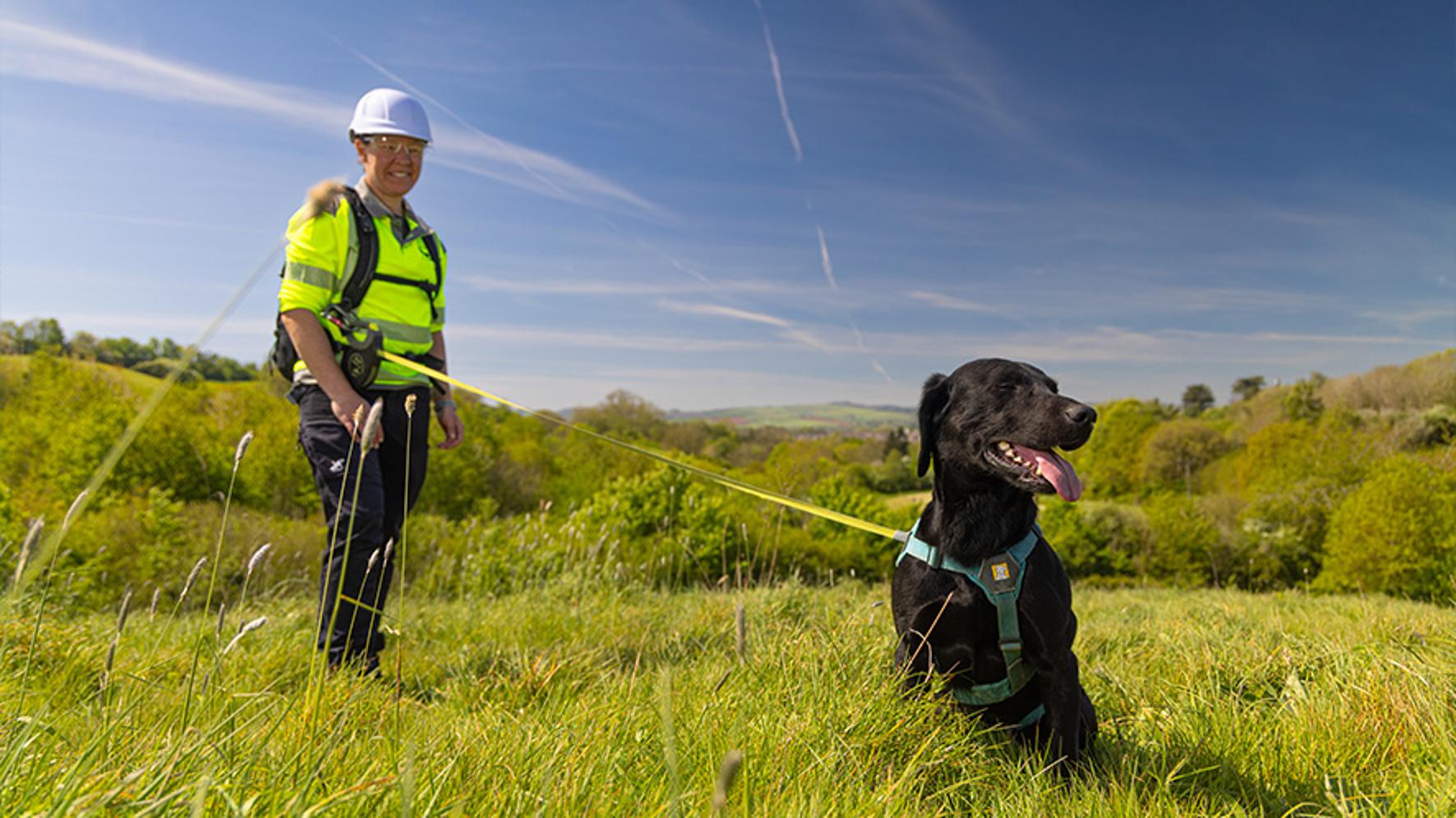
One innovative method used by South West Water is the use of specially trained leak detection dogs to locate leaks. Kilo and Denzel, two springer spaniels, are the company’s top dogs when it comes to the job and are not afraid to get stuck in and sniff out the leaks.
The dogs are trained to detect subtle traces of chlorine in drinking water, which enables them to tell the difference between a water leak and a natural pool of water. These skills, alongside their ability to cover large areas of rural land, make them the perfect tool for hard to find leaks.
South West Water also uses satellites and drones to spot leaks in isolated spots such as on Dartmoor and Exmoor. These innovative devices use technology such as thermal imaging to detect temperature differences in the ground, that could be caused by leaks.
Alistair Milton, Water Loss and Control Delivery Manager for South West Water, said:
“Reducing leakage is so important to us, especially with parts of the region in severe drought status, where saving water is critical for everyone.
We know customers rightly expect us to do everything possible to reduce water lost from our network, and we have recruited around 40 new leakage technicians this year as well as moving teams into areas where their work can have the greatest impact.
This is helping us repair an average of 440 leaks each week and by using advanced monitoring systems, acoustic sensors and leak detection dogs, we can find issues earlier, minimise water loss and ensure more water reaches customers when they need it most.”
Around 30% of leaks on the water network belong to private supplies and a leaky loo can waste up to 400 litres of water each day.