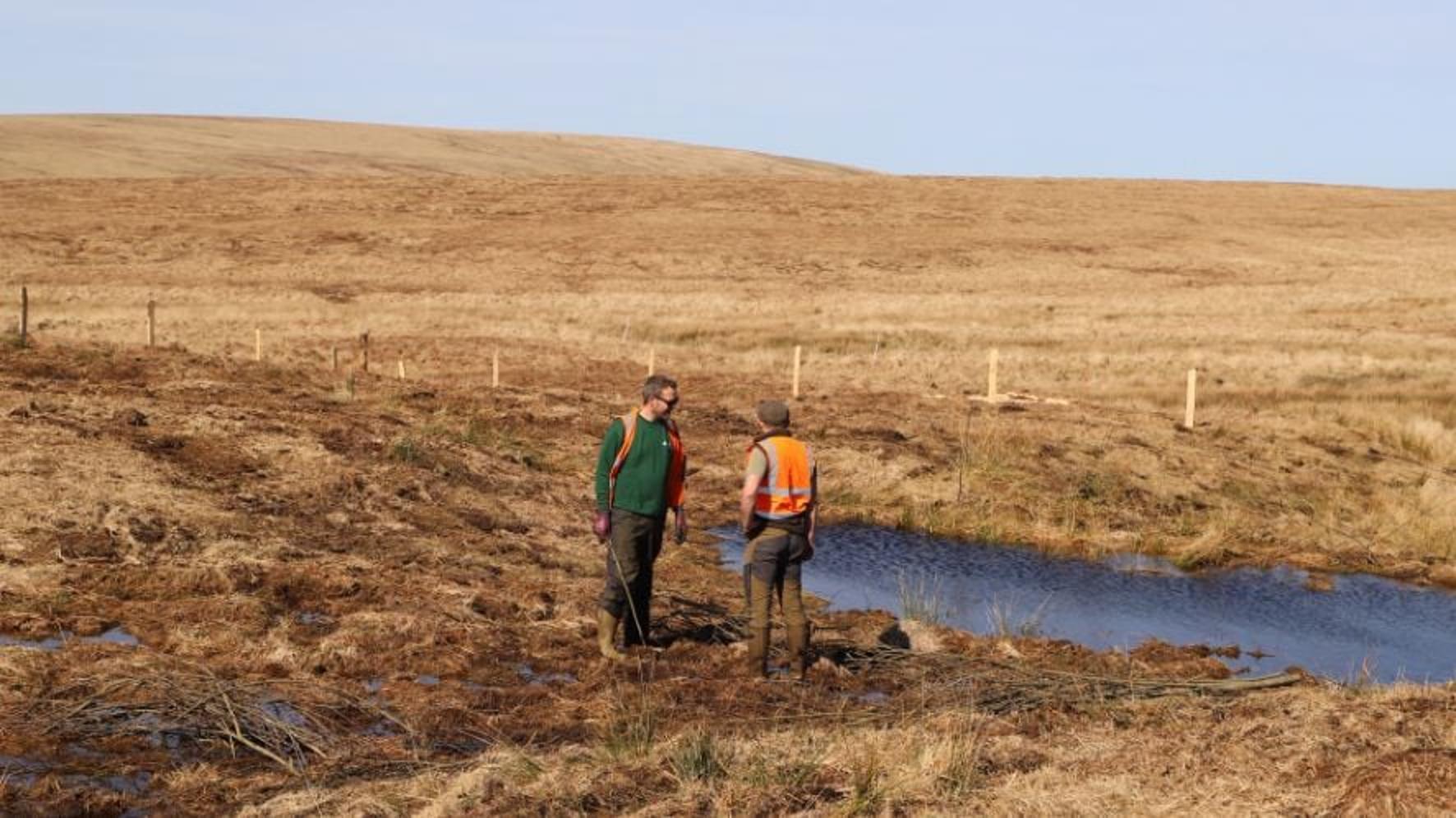
World Peatlands Day was celebrated earlier this month to raise awareness about the importance of these carbon-storing ecosystems, out of sight for many but crucial for life as we know it.
Globally, peatlands store more carbon than all of the world’s forests combined. However, once they are disturbed and dried out, they begin to release carbon and other warming greenhouse gases into the atmosphere.
Approximately 80% of peat in the UK is damaged and releasing emissions. That’s why the South West Peatland Partnership (SWPP), of which South West Water is a funder and lead partner organisation, is working across Dartmoor, Exmoor, Bodmin Moor and West Penwith to restore our valuable peatlands.
The SWPP has restored 5000 hectares of peatland that would otherwise have continued degrading – the equivalent of over 7000 football pitches.
When healthy and functioning, as well as storing carbon, peatlands support the recreation and livelihoods of people, benefit wildlife and help prevent flooding through natural water management.
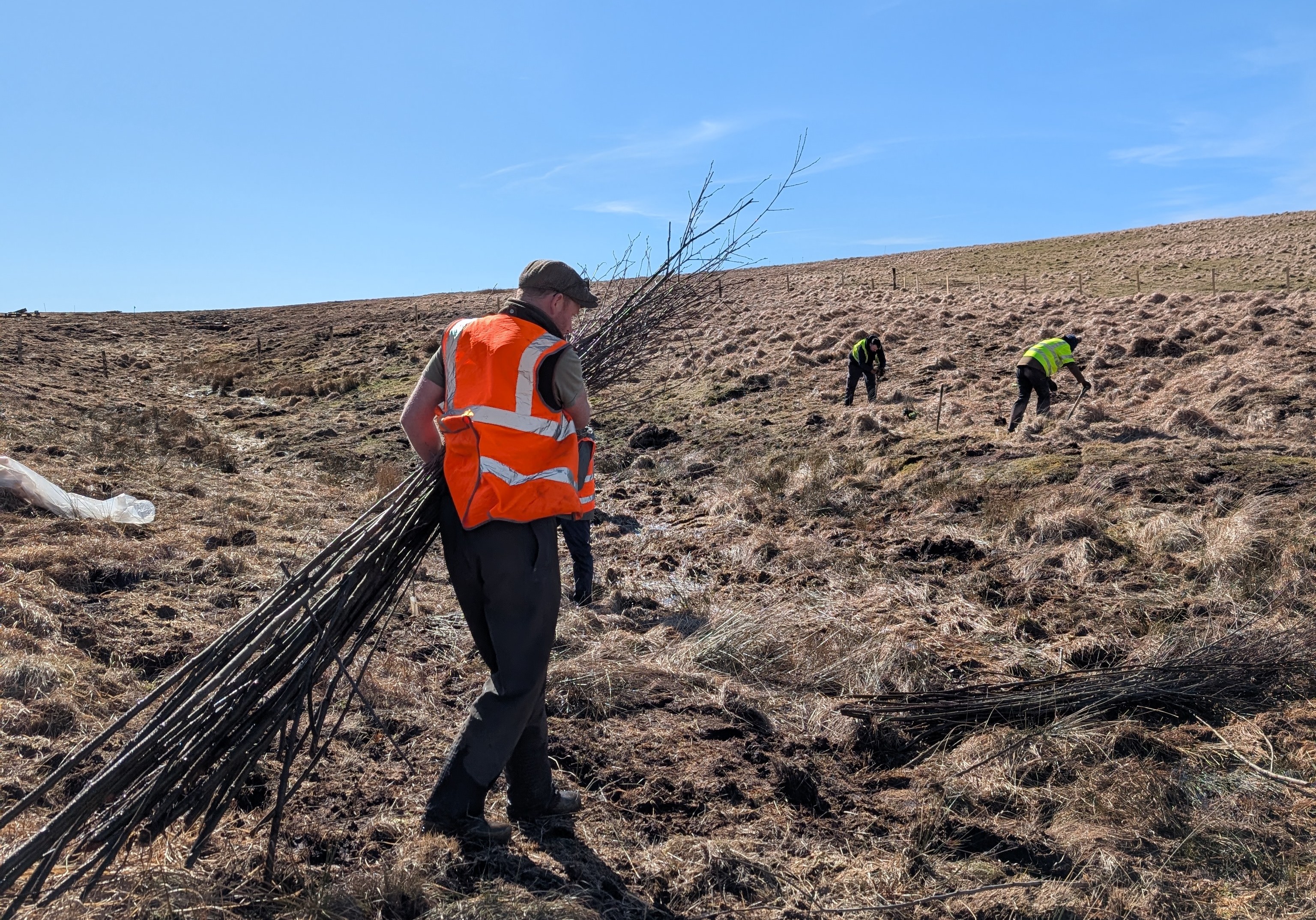
The SWPP team, helped by South West Water volunteers (pictured here alongside others) have been creating wooden blocks and planting trees in carefully chosen areas on Dartmoor to help trap sediment, slow water flow, diversify wildlife habitats and prevent further erosion of carbon-rich peat.
These actions help slow the flow of water leaving upland areas, levelling the water table in the peat and encouraging peat-forming mosses to colonise and thrive. Grey willow, oak, hawthorn, alder, and rowan saplings were planted in approved locations to support the stabilisation of water levels and provide habitat for birdlife and insects.
Peatland restoration is a long-term process, with peat forming at approximately 1mm per year, but many newly wetted sites are quick to show signs of success, from clouds of dragonflies to visiting wading birds.
Making our moorlands more resilient to extreme weather events also helps to protect thousands of years of history preserved in the peat and ensure that peatlands remain Earth’s largest land store of carbon.
 Travellers passing through St. Pancras International this month can see peat with their own eyes in a special pop-up of garden designer Martha Krempel’s The Composer’s Cabin (pictured above). The immersive feature garden appeared at RHS Chelsea 2026 and is inspired by the beauty and ecological importance of peatlands. The installation combines music and storytelling to raise awareness of the fragility of these ecosystems and the significance of their conservation with sustainable horticulture.
Alongside a self-playing piano, the garden features a transplanted peat core, provided by the South West Peatland Partnership, to give visitors a visual understanding of the layers of history preserved within peatlands. With a bog inspired soundscape of bird and insect noises and some plant species from the ecosystems themselves, the pop-up aims to transport visitors from London to the country’s peatlands.
The installation will hopefully educate millions of travellers passing through the station about how they can help peatland conservation through peat-free sustainable gardening.
Morag Angus, South West Peatland Partnership Manager, said: “World Peatland Day is an important part of raising awareness about peatlands and works to restore them, especially with the increasingly crucial role they could play in mitigating the climate crisis.”
Carolyn Cadman, South West Water’s Chief Sustainability and Natural Resources Officer, said: “Peatlands are pivotal to the wider ecosystem due to their ability to store carbon and slow the flow of rainwater, improving water quality and wildlife. The work that the South West Peatland Partnership do to help restore peatland is necessary and inspiring, and South West Water is proud to continue to support SWPP as their lead partner organisation.”
Early this year the SWPP commissioned Cornwall-based Here Now Films to produce ‘The Living Layer’, an 11-minute film celebrating peatlands and the teams making a difference to the future of these environments. The film went on to be awarded Overall Winner of the 2026 Edinburgh Conservation Film Festival in April. To learn more about peatlands watch the film here.