Image credit: SP Conservations
South West Water and Westcountry Rivers Trust have completed important habitat improvement work to promote river health, support fish populations and enhance biodiversity in the River Lyd.
The River Lyd in Dartmoor is a small westward-flowing river which runs through the deepest gorge in the South West, Lydford Gorge. The gorge is a Site of Special Scientific Interest (SSSI) because of its complex ecosystem. Its namesake river flowing through it supports a wide range of plant and animal species, including Atlantic salmon.
Salmon stocks are under threat, and the population within Great Britain was reclassified as ‘Endangered’ in 2023, making this habitat improvement work particularly important. Working with the Environment Agency and Westcountry Rivers Trust, South West Water created a plan to better protect salmon populations and, in doing so, protect the general health of the river’s ecosystem to mitigate potential impacts from abstraction.
The River Lyd is a popular angling location for trout and salmon, making the security of these salmonid species vital for people who enjoy the river, as well as the environment itself.
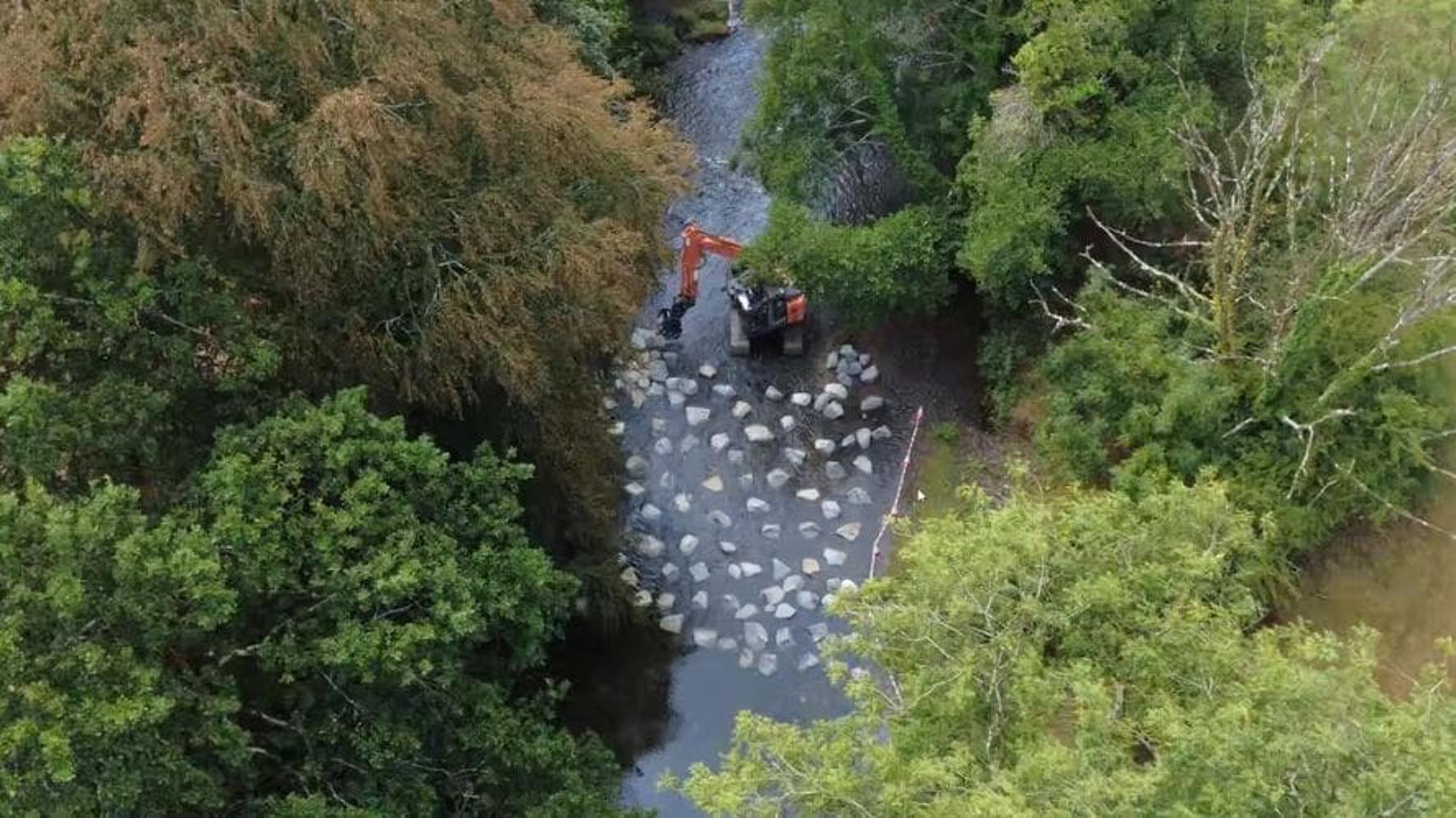
The most innovative part of the project is the introduction of a boulder array which aims to increase flow variability. Strong winter flows mean lots of the vital gravel that salmon and trout depend on for spawning are lost, being washed downstream. This boulder intervention is an intuitive way to retain the natural gravels as they are transported along the river. Over time, this will create a more resilient habitat that fish and other aquatic ecology can utilise.
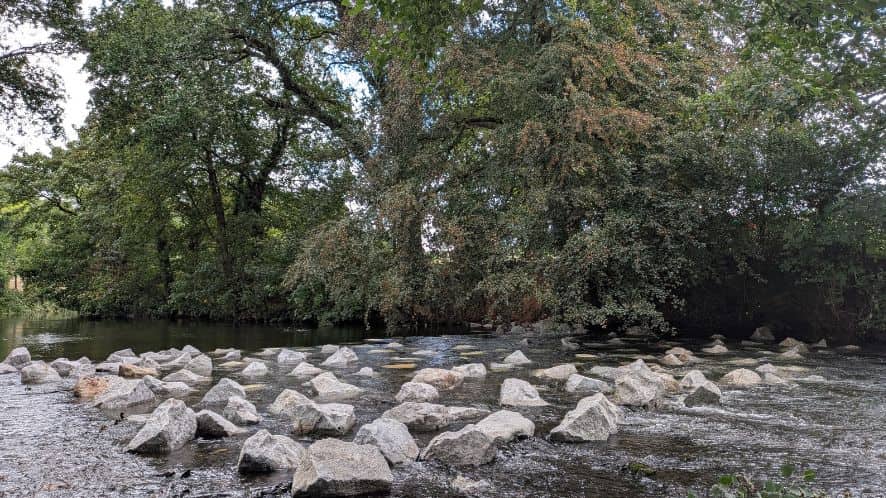
Image credit: Westcountry Rivers Trust
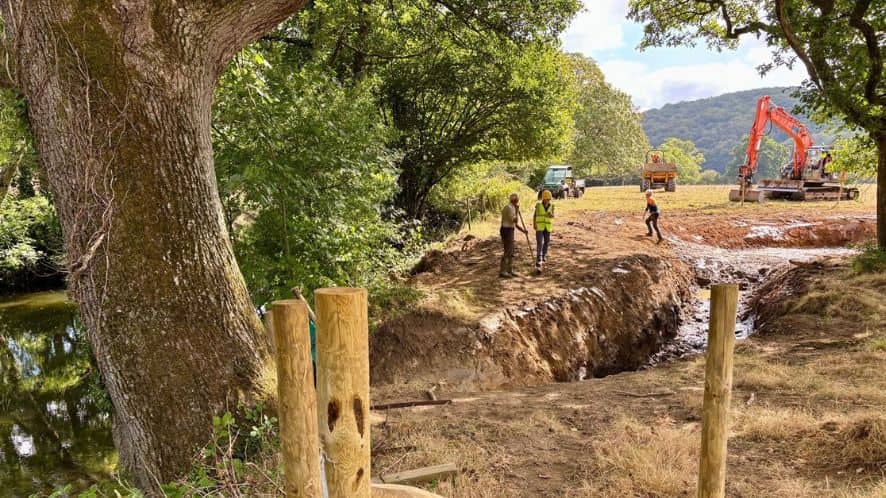
The project was designed to support fish at each stage of their lives, so in addition to the boulder array which will help to create nesting spaces, trees were laid across the riverbank and a backwater channel was installed to create safe spaces for fish to grow.
The refuge channel was dug into the adjacent field for fish to reside in during high flows, and trees laid along the riverbank were cut to become hinges, with their trunks kept intact to keep the trees alive. The branches in the river will protect fish from strong flows and provide safety from predators. The trees will also help to protect the bank from erosion by helping to slow the flow of water.
In combination, it is hoped that these improvements will provide a safe space for salmon to spawn and grow, and ultimately increase the resilience of the population in the River Lyd.
Dr Georgina Samoluk, Fisheries and Biodiversity Advisor at South West Water, said: Working with local partners has enabled us to deliver meaningful habitat improvements at this important location. We will monitor the project’s success and hope to apply what we learn elsewhere to provide wider benefits to this iconic species.”
Steph Knights, Head of River Restoration at Westcountry Rivers Trust, said: “World Rivers Day is a reminder that rivers face multiple pressures at once. On the River Lyd, abstraction licence conditions require South West Water to mitigate the impact of taking water from the river. We were contracted to deliver that mitigation, and in six months completed an options appraisal, ecological surveys to meet permit conditions, and works that respect flood risk, otter habitat, and notable bryophyte and lichen communities.
The result is a high-flow refuge backwater, cover for adult fish and a restored salmon spawning riffle. Habitats alone won't recover our rivers, but regulated mitigation done well makes a measurable difference.”