What’s the best way to water plants?
You buy a plant, put it in a pot or flowerbed, then water it every time it looks like it needs it, right? Not quite. The way you use water outdoors can make a difference to your plants and your water bill, as well as impacting the environment.
We’ve put together some tips to help you water well in the garden this summer.
Easy ideas for smart watering
Here are a few watering tips to keep your garden green:
- Watering once or twice a week is enough for most plants, unless they’re tiny seedlings. Watering less often makes plants develop deeper, stronger roots.
- If you can, water in the early morning, before it’s too hot. This sets the plants up for a sunny day and reduces evaporation.
- Add compost or mulch to your soil to help trap moisture. Larger plant pots also retain moisture better.
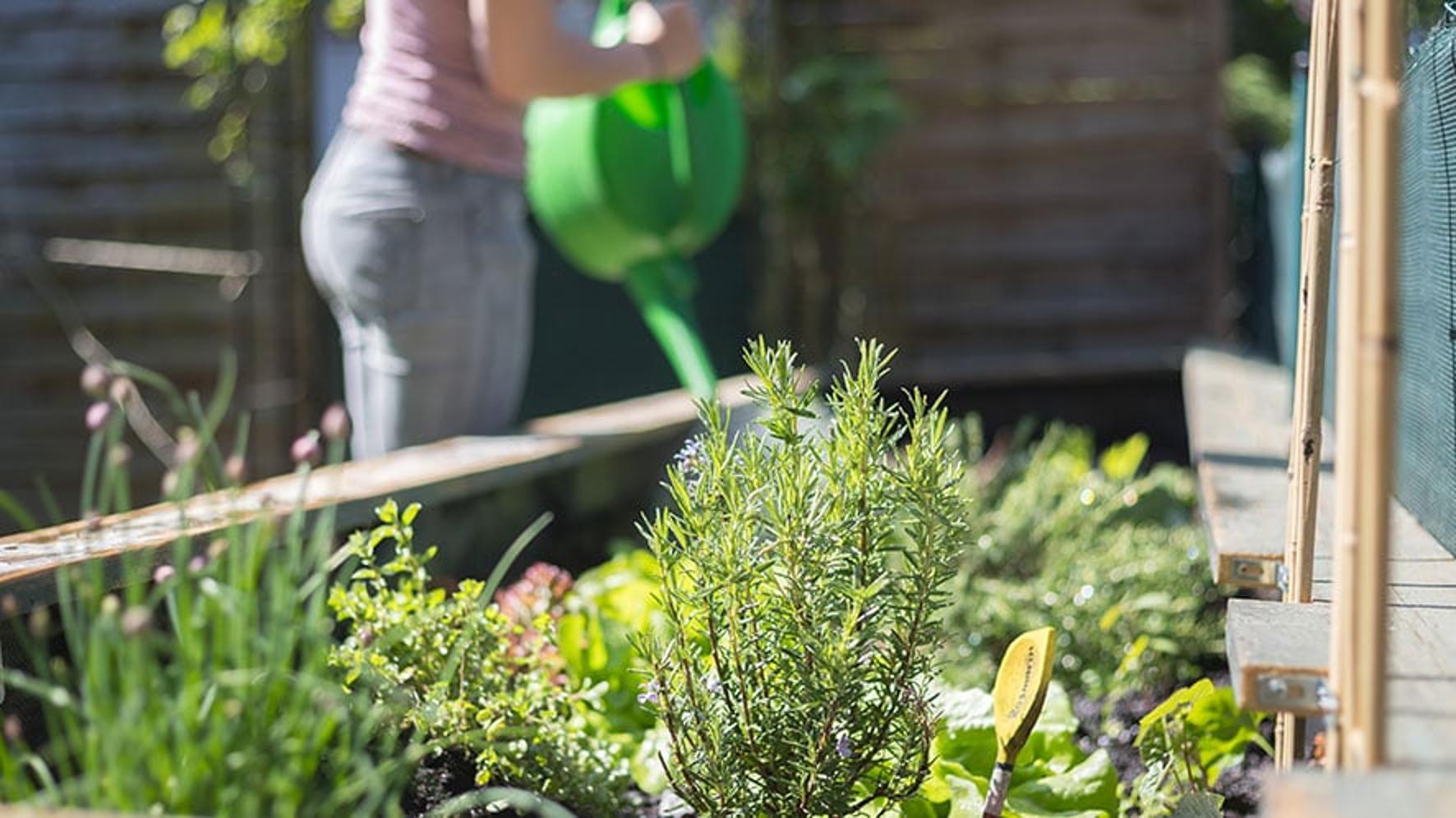
- Swap the hose for a watering can. Hoses can use 15 litres per minute (as much as a power shower) and quite often they spray across a wide area so you’re watering weeds as well as plants! Watering cans also give you a mini workout, helping you stay fit.
- Choose drought-tolerant plants, especially for sunny spots.
Reuse water from inside the home
All those leftover bits of water inside the home can really add up. Instead of tipping it down the sink, turn it into fresh blooms in your garden. Whether it’s in a watering can or poured round the base of a tree, this water can make all the difference.
- Use water or ice cubes left from drinks, washing salad or veg in a bowl, water bottles, or even cooled cooking water (in moderation, and so long as it’s not salty or oily).
- Keep a watering can or planter by the back door so you can easily step out to use the water.
- If you’re running your hot water tap and it takes a while to warm-up, collect the cooler water in a watering can or container.
- If you have a lawn, this is a great place to tip leftover water in a dry spell.
Get a water butt
It’s a shame water butts don’t have a prettier name, because they are absolutely amazing! Here are just a few of the benefits:
- It’s FREE – once you connect your water butt to a downpipe, you have a free source of water. If you’re on a meter, using this water in the garden instead of the hose should help bring down your water bills.
- Rainwater often has a higher acidity level than tap water, helping to nourish your plants.
- It’s more environmentally friendly. Treating tap water so it’s safe to drink uses energy, but plants don’t need perfectly clean water. Using rainwater saves the energy that would be needed to treat the same volume of tap water.
- You can link multiple water butts, giving you even more water storage. This is a great way to make the most of unused nooks and crannies in your garden.
- Helping to reduce flooding – water butts help to slow the flow of water after heavy rain, so there’s less water heading to waterways and low-lying areas.
If you don’t have space for a water butt, you can always leave buckets out in the garden to collect rainwater.
Using watering cans
You might think using a watering can is simple, but there are some tricks you might not be aware of:
- Only use a rose (the bit with lots of tiny holes) to protect seedlings and young plants. For established plants, remove the rose for better control.
- If you can afford it, buy a quality metal can – plastic ones tend to split within a year or two, making them leaky and sending you right back to the shops.
- Filling two cans at a time can be easier to carry as the weight is more balanced and you won’t strain sideways and spill water. You can always fill them both half-full to make it easier on your back.
- Water in circles over and around the plant. Most plants have root systems that extend out around the plant to at least half the plant’s height.
Why does saving water matter?
Being careful with water helps reduce your water bill (if you’re on a meter) and it can make your plants grow better and reduce your carbon footprint.
But there are other benefits too. Using a little less water helps to keep water reserves full in case of a long dry spell – climate change is making these more frequent. Keeping water in the natural environment also means there’s more for wildlife that depends on it.
For more water-saving tips, see our save water page.