The situation
The River Tamar is the UK’s only known spawning ground for allis shad (Alosa alosa), which is a migratory herring and a highly protected fish recently listed as Critically Endangered. Following consultation with Natural England, the Environment Agency, and other stakeholders, we’re proposing to construct a new fish pass at Gunnislake Weir. It will allow the allis shad and other native fish to migrate upstream more freely and restore greater access to their natural spawning habitat. This will relieve pressure on the spawning habitat downstream of the weir, and increase resilience and natural function of the allis shad population, now and in the future.
The new fish pass would replace the existing pass on the Cornish bank, which was designed specifically for salmon and sea trout only. The new design will allow all native migratory fish, including smelt, trout, salmon and eels, to travel up and down the river safely.
This project is part of our commitments to the environment under the Water Industry National Environment Programme (WINEP).
Proposed design
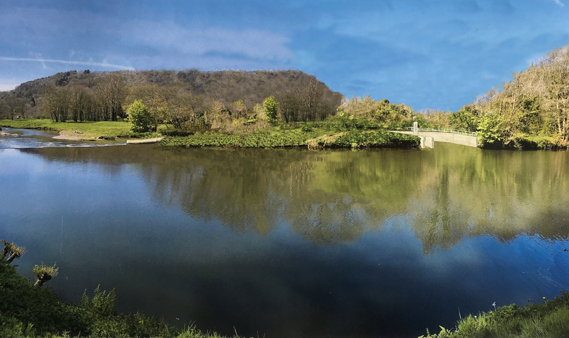
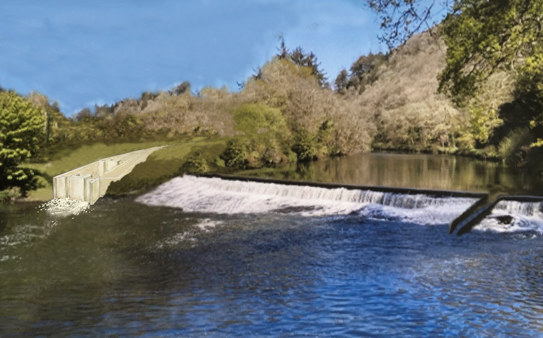
There were a few things we had to take into consideration to get this design right:
- South West Water abstract from the Tamar (up to 148,000m3 per day, subject to various license conditions). Gunnislake Weir plays a crucial role in both controlling the river levels to allow safe abstraction, and in future resilience to climate change, for example, sea level rise and saline intrusion.
- The Environment Agency monitors fish populations in the river and would need a solution that allows this to continue. They also wanted eels to be able to use the Pass.
- The scope of works requires the Fish Pass to cater for all designated fish species in the lower Tamar currently in unfavourable condition (includes SAC species allis shad and MCZ species European smelt).
How long will it take - when will it start and when will it finish?
Update June 2026
The programme is currently being revised following feedback and a new start date will be published to reflect the new timescale.
It is anticipated that the construction phase will last 10 months from start to finish. The programme is designed around ecological constraints of national significance, which limits the available programme delivery windows.
Once all feedback has been applied the project aims are to begin in the next available programme delivery window.
The construction programme is due to start in August/September 2027.
What we've done so far
- Site investigations to understand Scheme feasibility
- Consideration and modelling of alternatives
- Early Engagement with key stakeholders
- Ecological and Heritage assessments
- Detailed hydraulic modelling to ensure effective design
- Extensive consultation with industry regulators and national specialists
- Design completion, including extensive consultation from the Environment Agency and Natural England
- Project has been awarded: Planning Permission, Flood Risk Activity Permits, Marline Licence, Water Transfer Licence
- Preparing further information to support a Scheduled Monument Consent application
We're engaging with local landowners and residents to gain their feedback and knowledge of the local area to develop the plan and inform the design.
Other consultees include:
 |
 |
 |
||
 |
 |
 |